
Discover and Explore the Future of Automotive
NEXT MEDIA
partner by







News
Volver atrás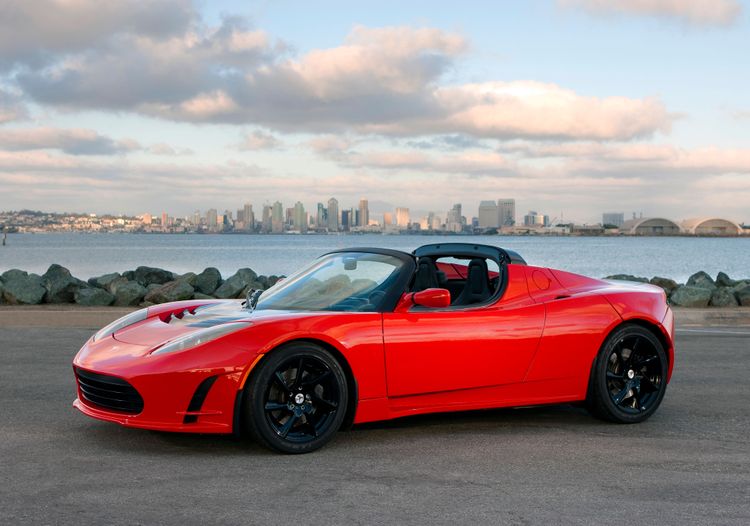
This is how Tesla was born and how it changed the electric car
In just two decades, Tesla has gone from being an unknown start-up to becoming one of the most influential manufacturers in the world. Its journey is full of risky decisions, technological advances, and a profound change in the way we understand automobiles.
The story does not begin with Elon Musk, although today he is inseparable from the brand. Tesla was founded in 2003 thanks to Martin Eberhard and Marc Tarpenning, two engineers convinced that electric vehicles could be a real alternative to combustion engines. Musk arrived a year later as the main investor and chairman of the board. His strategic vision and ability to attract capital transformed what was a risky project into a company with global ambition.
The Roadster, the industry's first warning
The first big step came with the Tesla Roadster in 2008. Based on the Lotus Elise, it proved that an electric car could travel more than 200 kilometers on a single charge and accelerate like a sports car. It was a game changer at a time when no one associated electric vehicles with performance. For workshops, it was also a first wake-up call: the mechanics to come would be different.
Two years earlier, Musk had already published his famous Master Plan, a brief text in which he clearly explained the strategy: start with an expensive, limited-production sports car, use the profits to fund a more affordable sedan, and then reach a high-volume car. All of this accompanied by investments in clean energy and storage systems. That roadmap was followed step by step: from the Roadster to the Model S, then to the Model 3 and Model Y. Later came the Master Plan Part II in 2016, focused on autonomous vehicles, and Part III in 2023, which expands the vision to the entire energy chain.
Cybertruck and the new era of electric vehicles
In 2019, the company broke the mold again with the unveiling of the Cybertruck. Its angular design, stainless steel body, and radical approach made it an icon even before it hit the market. Beyond its looks, it features high-capacity batteries and high-performance electric motors, proving that electricity can compete in a segment as demanding as pick-up trucks.
For workshops, it opens a new front: large vehicles, unusual materials, and systems that require adapting repair and diagnostic processes. The company's name was no coincidence either. Nikola Tesla, a pioneer of alternating current electrical systems, was a visionary who imagined a world powered by electricity. That same ambition is reflected today in the vehicles that bear his name: a balance between practicality and advanced technology that has redefined the concept of the automobile.
What seemed impossible twenty years ago ended up setting the path for the entire automotive industry. Tesla accelerated the arrival of the electric car, changed the relationship with drivers, and forced the whole industry to adapt. For workshops, watching its evolution is not just an anecdote: it is a way to anticipate the types of vehicles and customers that are already part of the present.