
Automotive Sector and Auto Repair Shop News
NEXT MEDIA
partner by







News
Volver atrás
10 facts about electric cars that affect the auto repair shop
Electric and hybrid cars are changing the automotive aftermarket and the day-to-day operations of repair shops. Their arrival not only brings new technologies, but also transforms the way vehicles are diagnosed, maintained, and repaired.
These ten facts help to understand where the sector is heading and what workshop professionals need to consider to adapt to this new reality.
1. Electrified cars are becoming more common in the workshop
Although the first electric car was built in 1832, it is only now that their presence is starting to grow significantly in the vehicle fleet. In Spain, electrified vehicles already represent an increasingly relevant share of registrations.
This means that more electric and hybrid vehicles will arrive at the workshop each year. Technical preparation, training, and access to specialized information will be key to servicing them safely and effectively.
2. Regenerative braking changes brake maintenance
Regenerative braking allows part of the energy during deceleration to be recovered and sent back to the battery. Thanks to this system, brake pads can last longer than in a combustion vehicle.
However, this does not mean that the braking system requires less attention. On the contrary, maintenance must be adapted, as more electronic components and control systems are involved. Regular inspections remain essential to ensure vehicle safety.
3. There are fewer moving parts, but more reliance on software
An electric motor has far fewer moving parts than a combustion engine. This reduces some traditional mechanical failures, but increases the importance of other elements: electronics, sensors, control modules, and software.
For the workshop, this is a significant change. Electronic diagnostics, system updates, and interpretation of technical data will become increasingly common in repairs.
4. Low-speed sound serves a safety function
Electric cars are very quiet, especially when driving at low speeds. For this reason, they incorporate an acoustic warning system that generates an artificial sound to alert pedestrians and other road users.
This system is also part of the vehicle and may require specific checks during certain interventions or diagnostics.
5. Batteries require proper equipment and protocols
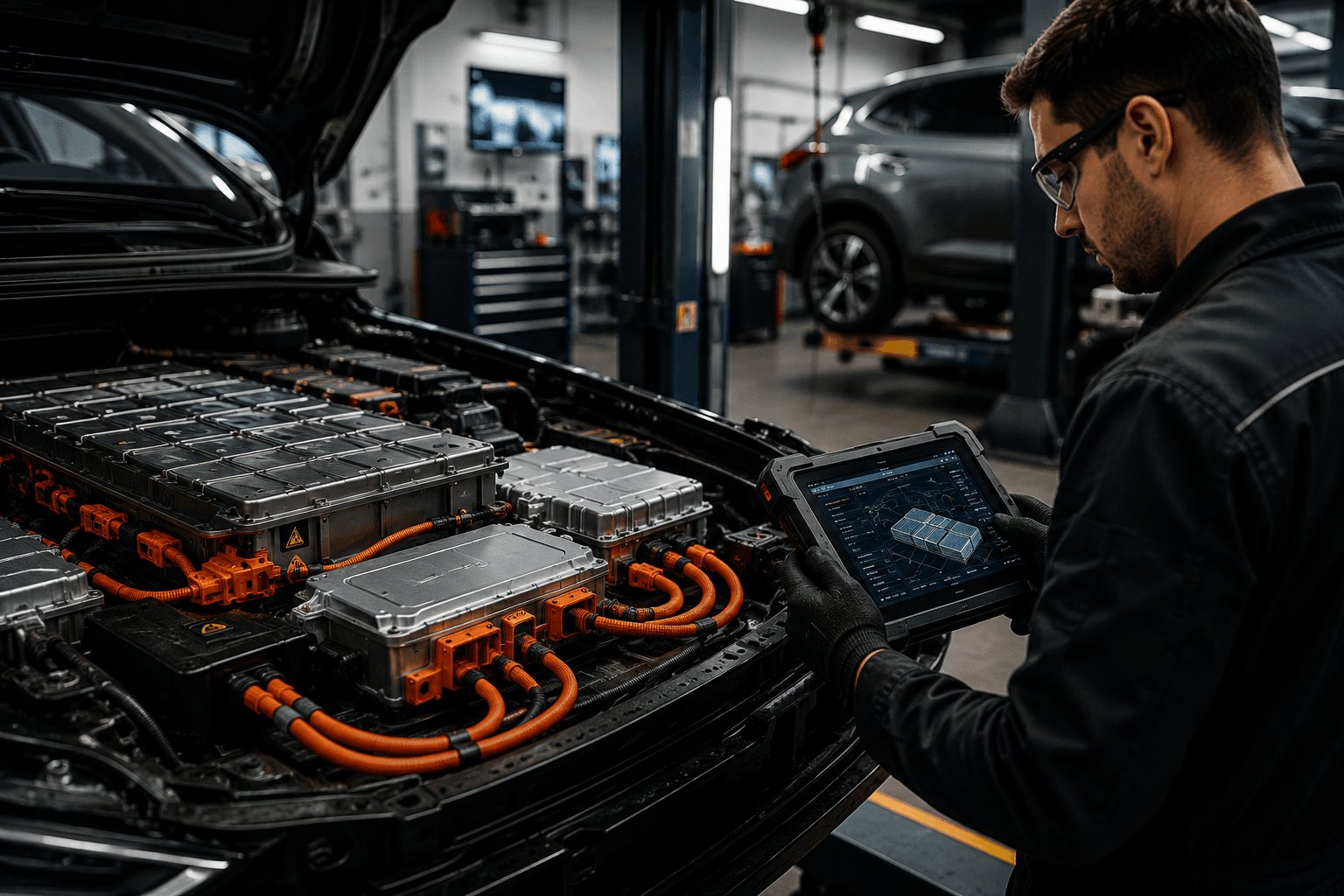
High-voltage batteries are one of the most important elements of the electric car. Some packs can exceed 500 kilos, so handling them requires specific tools, lifts, and safety protocols.
The workshop must be prepared to work with high-voltage vehicles, both technically and preventively. The safety of the professional and the vehicle depends on proper training and well-defined procedures.
6. Heat and cold affect battery performance
Extreme temperatures can reduce range and affect battery lifespan. That is why cooling, heating, and thermal management systems play an essential role in electric vehicles.
This opens up new maintenance opportunities for the workshop: preventive inspections, checking the thermal system, analyzing battery condition, and diagnosing possible performance losses.
7. Instant torque changes the wear of some components
One of the characteristics of electric motors is the immediate delivery of torque. This quick response can alter the wear of tires, transmission, and other components, especially in certain models or driving styles.
For the workshop, it will be important to carefully inspect these elements and advise the customer on the proper maintenance of their electric vehicle.
8. Batteries can have a second life
When a battery is no longer suitable for use in a vehicle, it can be reused as an energy storage system. This second life is part of the sustainability cycle of the electric vehicle.
The workshop will increasingly need to become familiar with processes related to disassembly, recycling, safe handling, and battery traceability.
9. Not all charging affects the battery equally
Frequent use of fast chargers can accelerate battery degradation. For this reason, many customers will need guidance on charging habits, range, and preventive maintenance.
The workshop can become a technical advisory point to check the state of the battery using specialized diagnostic equipment and help the user extend its lifespan.
10. The vehicle architecture also changes
Electric cars usually use specific platforms that modify weight distribution, support points, and access to certain components.
This affects both general mechanics and body repairs. The workshop will need to consider new procedures, safety zones, lifting points, and manufacturer recommendations.
The workshop facing the new electric mobility
Electrification does not eliminate the need for workshops, but it does transform their role. Electric vehicles require new knowledge, appropriate equipment, ongoing training, and access to up-to-date technical information.
For repair professionals, preparing for this evolution is no longer a future option: it is a necessity to continue responding to an increasingly electrified vehicle fleet.
Contact us!
Partner by