
Automotive Sector and Auto Repair Shop News
NEXT MEDIA
partner by




News
Volver atrás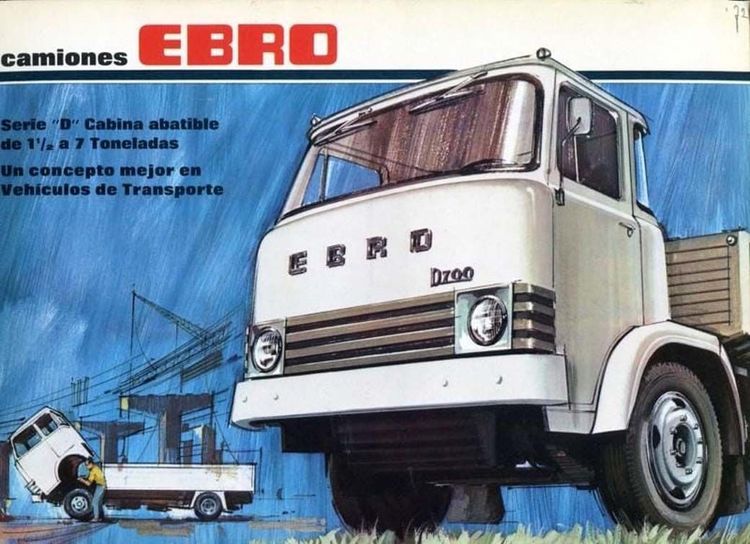
Ebro: the rebirth of a Spanish brand
There are stories that deserve to be told twice. Ebro's, a brand deeply tied to Spanish industrial development, is one of them. Its journey began in the 1950s, when Motor Ibérica decided to give a proper name to a project that aimed to motorize a country that was awakening. Decades later, that same name is once again heard in workshops, but with a completely different meaning: renewal, employment, and electric technology made here.
An origin that marked an era
In 1954, Motor Ibérica began producing under the Ebro name after taking over the operations Ford had started in Spain. The name, inspired by the river that crosses much of the peninsula, quickly became a symbol of an industry that was starting to take shape.
Ebro's trucks, vans, off-road vehicles, and tractors were part of the mechanical landscape for more than three decades. Workshops across the country worked on models like the F Series / Trade or the robust Patrol, vehicles that helped professionalize maintenance and that today are part of the technical memory of many veteran mechanics.
In 1987, the brand disappeared, absorbed by an industrial integration process that brought an end to a key era in Spanish automotive history.
Return to activity: an industry reorganizes
Ebro's comeback takes place at a complex time for Spanish automotive. The closure of Nissan in the Zona Franca left one of the country's most iconic factories without activity and created enormous uncertainty for hundreds of professionals with decades of experience in production, welding, painting, logistics, and quality control. For months, it was unclear whether that industrial know-how would remain within the sector or end up dispersing.
The Ebro project offers a way out of that situation. The brand recovers the Barcelona facility and restores jobs to many of the affected workers, who now participate in the manufacturing of electric vehicles. The alliance with Chery provides already-developed platforms and technology, allowing production to start without the usual lead times of a brand starting from scratch. This approach speeds up the return of activity to the plant and prevents a high-level infrastructure from being abandoned.
The reopening also benefits the automotive supplier network in Catalonia, which once again receives orders and reactivates lines that depended directly on local production. The industry gains stability, and the country retains a manufacturing capacity that is strategic during the transition to electric mobility.
What it means for workshops
Ebro is the introduction of a new type of electric vehicle designed and assembled in Spain. Its platforms combine Asian engineering with local adaptation, resulting in:
New diagnostic procedures related to batteries and high-voltage systems.
Spare parts and technical support closer at hand thanks to domestic manufacturing.
A product line that strengthens the market's real transition toward electrification.
Spanish workshops, already familiar with hybrids, BEVs, and all kinds of micro-hybrids, will now have one more manufacturer in their daily ecosystem, with the advantage of having an industrial contact within the country.
A historic name for a new era
Ebro returns with an identity adapted to the present: sustainable mobility, local production, and a value chain that brings back specialized jobs. It is a clear sign of the sector's current moment: global alliances, reactivated plants, and brands finding new opportunities in electrification.
For those working in workshops, understanding this evolution is not anecdotal; it is part of the industrial landscape that will shape training, diagnostics, and the type of vehicles entering the shop in the coming years.
The river that gave Ebro its name flows once again within Spanish automotive. This time, with electric energy.
Contact us!
Partner by