
Automotive Sector and Auto Repair Shop News
NEXT MEDIA
partner by







News
Volver atrás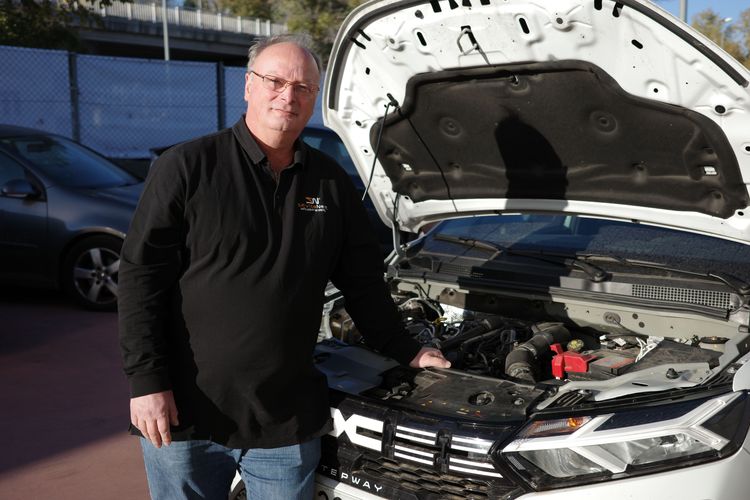
Technical analysis of the Dacia Sandero TCe engine by Lluis Godayol, trainer at Next Academy
The Dacia Sandero TCe has been, for years, one of the most relevant models for any workshop in the country. This is no coincidence: we are talking about the best-selling car in Spain for more than a decade, which means its presence in workshops is constant and growing. That is why it is so important to thoroughly understand its architecture, its particularities, and the factors that affect its diagnosis and maintenance.
A small engine with parameters that demand precision
Within the segment of low-displacement turbocharged engines, the TCe stands out above average. The first thing that draws attention is the maximum injection pressure, which reaches 300 bar, one of the highest found today in direct injection gasoline engines. This figure, far from being anecdotal, affects both the quality of combustion and the problems arising from soot particles and oil dilution. Added to this is a turbo boosting at 1.5 bar, also above the usual standard, and a blow-off valve that eliminates the ram effect when lifting off the accelerator. All of this makes for a compact engine, but with technical demands that the mechanic must keep in mind from day one.
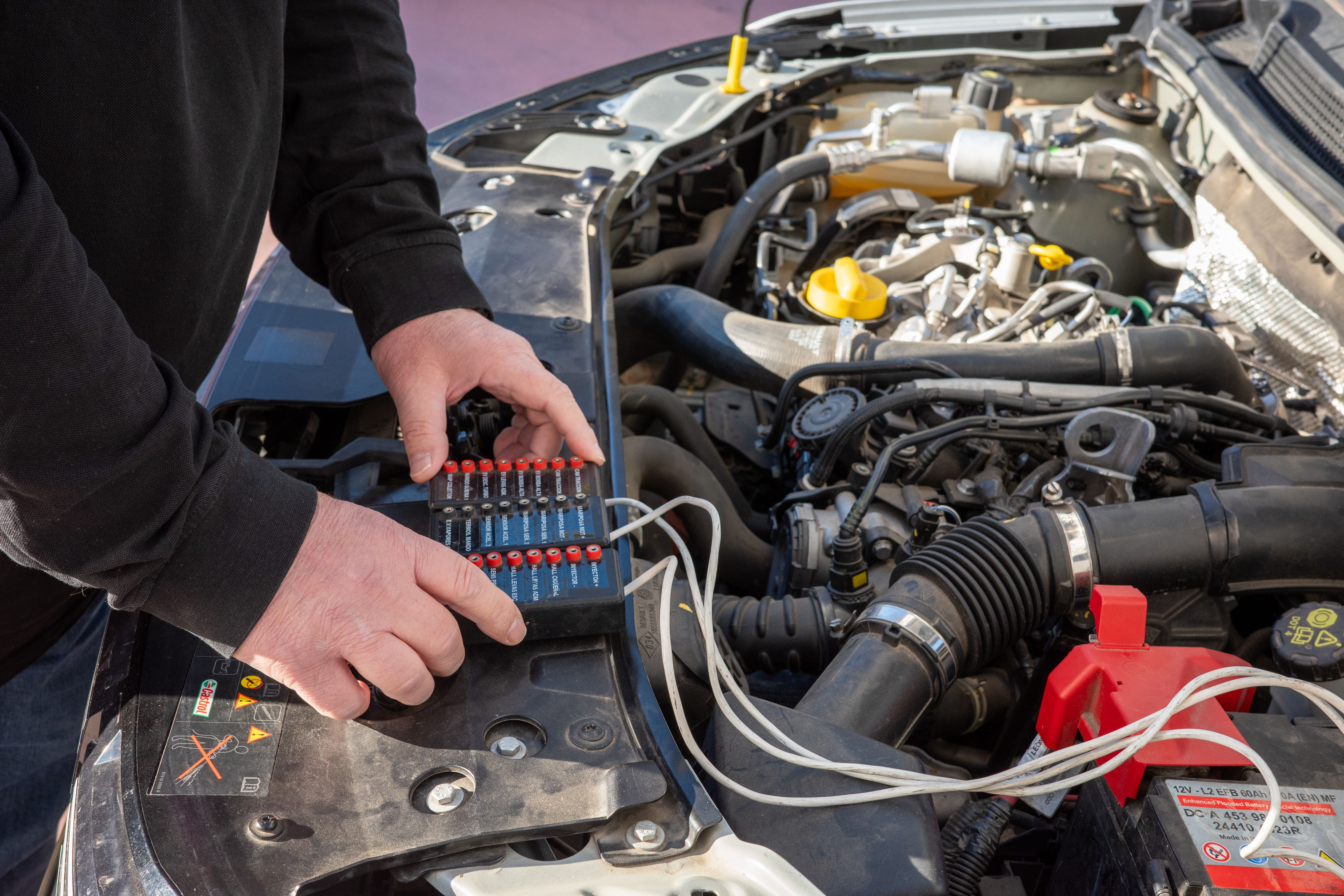
Another particularity worth highlighting is the differential sensor of the particle filter, which uses the SENT protocol (SAE J2716). Unlike traditional sensors, it does not deliver a conventional analog signal, but rather an encoded communication. This can lead to erroneous diagnoses if its operation is not understood and if its output is interpreted as a typical electrical fault. For many workshops, this detail represents a learning curve that should be anticipated.
Differences between versions: a nuance that matters more than it seems
The 90 and 100 HP TCe engines use the H4D 900 cc block, while the 110 HP Sandero is equipped with the H5D 1,000 cc, a direct evolution of the previous one. Although at first glance they seem almost identical variants, knowing the displacement and technical evolution helps avoid confusion in reference values, breakdowns, and procedures. This facilitates diagnosis and reduces unproductive time in the workshop.
Recurring problems that reach the workshop
Among the most common issues is the well-known "stretching" of the timing chain. This phenomenon does not occur for a single reason, but rather due to the sum of several factors:
– Oil contamination by soot, typical of combustion in direct injection,
– Gasoline dilution during regenerations,
– Excessively long maintenance intervals (30,000 km),
– Very low viscosity of the recommended oil (0W20).
When all these elements coincide, the tensioner does not work within its ideal range, slack appears, and the chain ends up changing its effective length. The recommendation for the workshop is clear: reduce maintenance intervals and explain this to the customer from a technical prevention perspective, not from fear. It is a simple measure that prevents costly breakdowns and improves engine performance in the long term.
Contact us!
Partner by