
Automotive Sector and Auto Repair Shop News
NEXT MEDIA
partner by





News
Volver atrás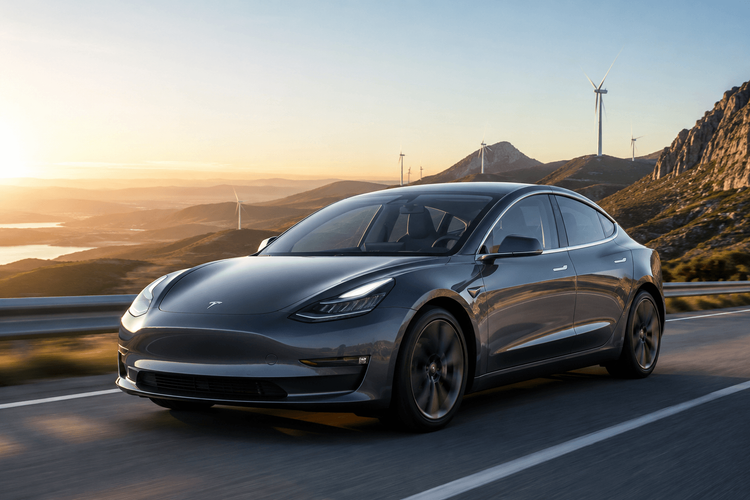
This is how Tesla was born and how it changed the electric car
In just two decades, Tesla has gone from being an unknown start-up to becoming one of the most influential brands in the automotive industry. Its evolution has not only changed the way we understand the electric car, but has also forced manufacturers, distributors, and workshops to prepare for a new reality: more connected vehicles, more electrified, and with a strong dependence on software.
The story of Tesla is one of innovation, risk, and transformation. But it is also a clear signal for the aftermarket: any workshop that wants to remain competitive needs to understand how the vehicle has changed and what new needs it brings.
The origin of Tesla: a bet on the electric car
Although today Tesla is directly associated with Elon Musk, the company was founded in 2003 by Martin Eberhard and Marc Tarpenning. Both advocated for an idea that at the time seemed very ambitious: to prove that the electric car could be a real alternative to combustion vehicles.
Elon Musk joined a year later as the main investor and chairman of the board. His entry helped boost the project, attract capital, and turn a risky idea into a company with global ambition.
From the beginning, Tesla did not want to present the electric car as a limited or secondary option. Its goal was to prove that an electric car could offer range, performance, and advanced technology.
The Tesla Roadster: the first warning to the industry
The first big statement came in 2008 with the Tesla Roadster. Based on the Lotus Elise, this model proved that an electric car could have a range of over 200 kilometers and accelerate like a sports car.
At a time when many associated the electric car with urban, slow, and unattractive vehicles, the Roadster changed the market's perception.
For the industry, it was a wake-up call. For workshops, too. That model anticipated a transformation that is now evident: less traditional mechanics, more electronics, more energy management, and a greater need for specialized diagnostics.
The Master Plan: a strategy that set the path
Even before Tesla consolidated itself as a global manufacturer, Elon Musk published his well-known Master Plan. The strategy was clear: start with a high-priced sports car, use the profits to develop a more affordable sedan, and then move towards a high-volume model.
That roadmap was fulfilled with the arrival of the Roadster, the Model S, the Model 3, and the Model Y.
Beyond specific models, Tesla's plan put an important idea on the table: the electric car was not just a new product, but a new way of understanding mobility, energy, and the relationship between the vehicle and the user.
From Model S to Model Y: the electric car reaches the masses
With the Model S, Tesla proved that an electric vehicle could compete in the premium segment. With the Model 3, it brought that proposal to a wider audience. And with the Model Y, it strengthened its presence in one of the most in-demand formats on the market: the SUV.
This evolution has had a direct impact on the aftermarket. More and more electric and hybrid vehicles are arriving at workshops, and with them come new needs:
- Advanced electronic diagnostics
- High-voltage battery management
- Software and updates
- Specific cooling systems
- Regenerative braking
- New electrical architectures
- High-voltage safety procedures
The workshop no longer just repairs mechanical components. It must also interpret data, work with complex electrical systems, and follow increasingly specific technical procedures.
Cybertruck: materials, design, and new challenges for the workshop
In 2019, Tesla broke the mold again with the presentation of the Cybertruck. Its angular design, stainless steel body, and radical approach made it a very different vehicle from what the market was used to seeing.
Beyond its appearance, the Cybertruck represents another challenge for the aftermarket: large vehicles, unusual materials, new structures, and different repair processes.
For the workshop, this type of vehicle confirms a clear trend. Car repair no longer depends solely on traditional mechanical experience. Each model may require specific technical information, appropriate tools, and continuous training.
Why Tesla also matters to the independent workshop
Tesla's evolution is not just a brand story. It is an example of where the entire automotive industry is heading.
Traditional manufacturers have accelerated their electrified ranges, customers are increasingly familiar with electric cars, and workshops are starting to receive vehicles with technologies that seemed distant just a few years ago.
For the independent workshop, this means adapting to a new way of working:
- Greater focus on diagnostics
- More technical training
- Greater importance of software
- Greater need for up-to-date technical information
- More attention to safety protocols
- More specialization in electrical and electronic systems
The transformation does not happen overnight, but it is already present in the daily life of many workshops.
The electric car changes the relationship with the customer
Tesla has also changed the relationship between driver and vehicle. Central screens, updates, connectivity, driving assistants, and digital functions have led many customers to expect a more technological experience.
This also affects the workshop. The customer no longer just asks about a mechanical breakdown. They also inquire about range, charging, updates, system alerts, energy consumption, or battery behavior.
The workshop that can answer these questions will have a stronger position in the new aftermarket.
What Tesla anticipates for the aftermarket
Observing Tesla's evolution allows us to understand several changes that are already affecting the sector:
- The electric vehicle needs less traditional mechanical maintenance, but more electronic control
- The battery and thermal management are gaining importance
- Diagnostics are becoming a central part of the work
- Software is increasingly important to vehicle operation
- Technical training will be key to continuing to repair safely
- Up-to-date technical information will make the difference
Tesla not only pushed the electric car forward. It also accelerated a transformation that directly affects workshops.
Preparing for the new automotive industry
What seemed like a risky bet twenty years ago is now part of the present. Tesla accelerated the arrival of the electric car, changed the market's perception, and forced the entire industry to move.
For workshops, this evolution is not an anecdote. It is a clear sign of where the automotive aftermarket is heading.
The vehicles arriving at the workshop are increasingly technological, more connected, and more electrified. Preparing with training, technical information, and appropriate diagnostic tools will be key to continuing to meet the new needs of customers.
Tesla changed the electric car. Now the workshop must prepare for everything that change brings with it.
Contact us!
Partner by